
The Androots Guide to Thrifting the Perfect Planter
I love the feeling of walking into a local antique store and spotting a ceramic piece destined for its new use.
It is a very different experience than grabbing a standard nursery pot off a shelf. A thrifted vessel has character already built in. It may have an unusual silhouette, a soft worn glaze, or the kind of detail that makes a plant feel instantly more personal and alive in a space.
The best part is that any vintage piece found in the wild has the opportunity to become a one-of-a-kind piece only you own, which necessitated the right time and palce for you to come across it.
At Androots, we pride ourselves on sourcing unique and stylish vessels to create what we like to think is live plant art.
What should I look for first while browsing antique and thrift stores?
When I am scanning shelves, I start with shape before I start with size, because vintage pieces rarely behave like standard cylindrical planters.
I look at:
A vessel can look generous on the outside and still be impractical for your plant. Some pieces are wide through the middle but taper tightly at the top. Others are tall but narrow inside. Some are simply too delicate or unstable for a living plant that will need watering, movement, and future repotting.
How do I judge the right size while I am still in the store?
If I know the plant I am shopping for, I start by thinking about its current root system. In most cases, I am looking for a vessel that gives me approximately a 2 inch upsize. That is a helpful baseline, but it is never the only thing I measure.
Width, height, and opening all need to work together.
The best find is not the biggest one on the shelf. It is the one that fits thoughtfully and allows you to find a unique way to complement the proportions of your plant.
For example, a plant currently in a 6-inch nursery pot may be ready for something around 8 inches. But two vintage vessels with the same width can have entirely different shapes. One might be broad and shallow. Another might be narrow and tall. One may suit the plant beautifully, while the other creates poor proportions or awkward planting conditions.
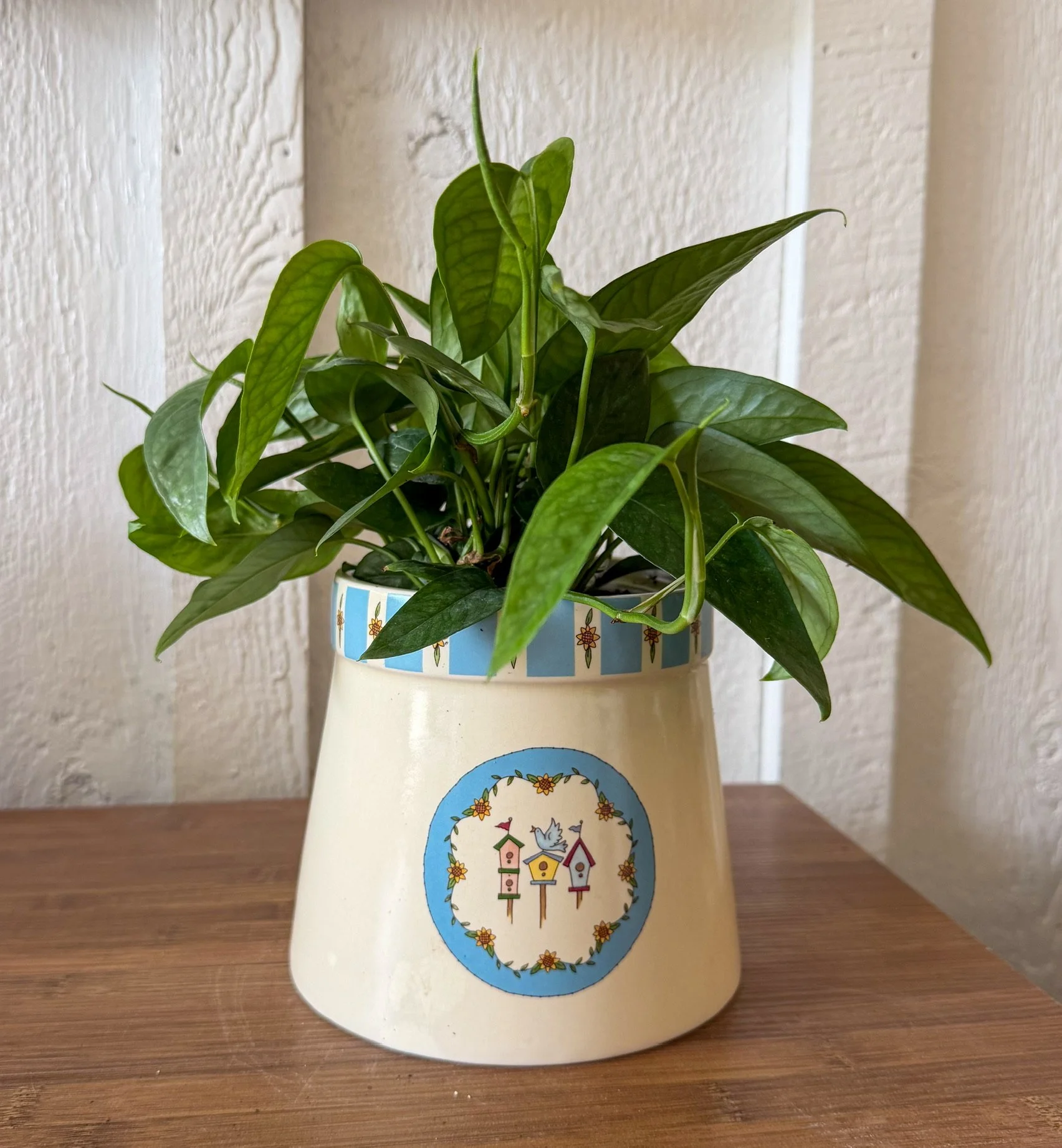
This is the kind of thrifted find that comes closest to a traditional planter. The vintage ceramic cookie jar already had the depth, stability, and open shape to accommodate almost any houseplant; all I needed to do was drill a drainage hole. Its birdhouse detailing adds a one-of-a-kind twist without changing the basic planting setup.
Which thrifted vessels make especially good plant pairings?
I do not believe there are many plants that are automatically excluded from vintage ceramics. For me, success comes down to proportion, root needs, and styling.
That is the magic of thrifted styling. The vessel already has a story, and the plant helps continue it.
What matters is whether the roots fit well, the proportions feel balanced, and the finished piece looks ready to live naturally in your space. The success comes from the pairing, not from forcing every plant into the same kind of container.
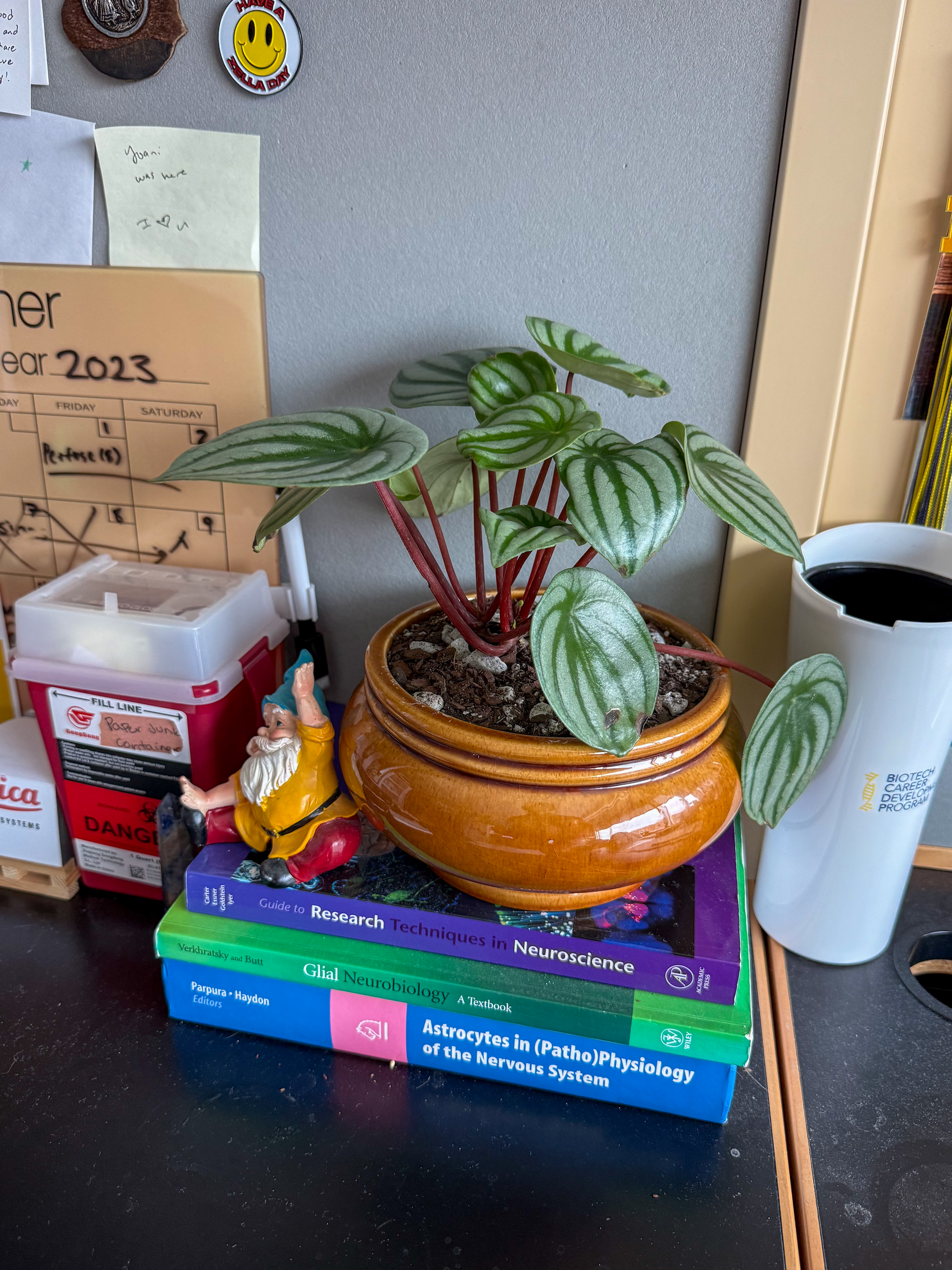
Why this vintage bowl works
One pairing I love is a shallow-rooted plant in a vintage bowl. An amber-glazed stoneware crock bowl paired with a watermelon peperomia is a great example: the low, open form feels calm, balanced, and intentional. This shape is not right for every plant, but the peperomia’s naturally horizontal silhouette and relatively fine, compact roots allow it to establish comfortably in a wider, shallower vessel with enough soil depth and proper drainage.
How should I handle drainage when I find a thrifted ceramic I love?
For a plant that will be planted directly into the piece, a drainage hole is essential. That does not change just because the ceramic is old or unusual because the roots still need a way for excess water to escape.
At Androots, I do not use cachepots. Every vessel is drilled to add a drainage hole before a plant is placed directly into it. I take precautions to ensure safety of the pot (and myself) when drilling vintage ceramics.
Before buying, I also recommend checking closely for cracks. Some pieces are genuinely older and sturdy. Others are decorative pottery styled to look vintage, and those may be more prone to failure.
At Androots, I hand-pair plants and ceramics with that balance in mind. Our shop features ready-to-display botanical pieces, and our care instructions help you support your plant after it comes home.
If you have a special plant, a thrifted vessel you want help assessing, or a room that needs a little more life, our custom consultations are designed to help. We can talk through fit, proportions, drainage, and styling so the final piece feels calm, practical, and truly integrated into your home.
Reach out to Androots when you are ready to style a vintage find that really works. We can’t wait to hear from you!